With spooky season fast approaching, there's only one thing that strikes fear in me as a PC gamer—creaky internet. I could tell you just how long it took to download Baldur's Gate 3 over my dubious internet connection recently, but I fear your heart couldn't take it.
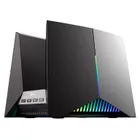
Ian scored the router 81% in his last year, and it's one of our top picks for the for good reason. Setting aside its overengineered, mothership look—or what a pain that lattice design will be to dust—this router has a lot going for it. As a Wi-Fi 6E router, the TP-Link Archer AXE75 dips a toe jinda44 into the 6 GHz band and, as a result, can offer speeds of up to 2402 e19 Mbps.
But that advertised speed comes with a few caveats, of course. Let me be clear about one thing for a start: a new router isn't guaranteed to fix all of your internet woes. For another thing, the TP-Link Archer AXE75's WAN port caps out at 1 Gbps. That means that even if your ISP is serving up faster internet, your connection via this router will still be capped at 1 Gbps as it will have to squeeze through the WAN port's bottleneck.
Internet speeds can also be affected by a number of other factors, betdog from your local infrastructure to the layout of your house. For instance, higher frequencies have a harder time passing through walls, so the TP-Link Archer AXE75 6 GHz band is better suited to pushing out big downloads to, say, a gaming PC in the same room as the router. The same can be said for newer routers offering Wi-Fi 7 tech and beyond.


However, routers offering those higher frequencies and advertised speeds are bound to be more expensive than the TP-Link Archer AXE75. The Wi-Fi 6E tech here is still more than serviceable, and you can also set up separate 5 GHz and 2.4 GHz networks for your less data-hungry devices.
This allows your phones, tablets, or Internet of Things devices to have their fill without being massively throttled by a big game download hogging all the bandwidth on the same frequency.
Managing multiple networks of different internet frequency bands might prove a headache for some. You can, of course, keep all of those bands bundled together in the same network if you so choose, leaving it up to the router and your client devices to work out which frequency is best.
Still, three networks means you're gonna need to come up with three fun names, right? I'm thinking 'The Gamer Zone' for the 6 GHz band, 'Second Screen Scene' for the 5 GHz spectrum, and then 'Scrub Land' for the 2.4 GHz network.
1. Best overall:
2. Best mid-range:
3. Best budget:
4. Best mesh:
5. Best budget mesh:
6. Best for wired:
7. Best Wi-Fi 6E: